 FourFaith IoT
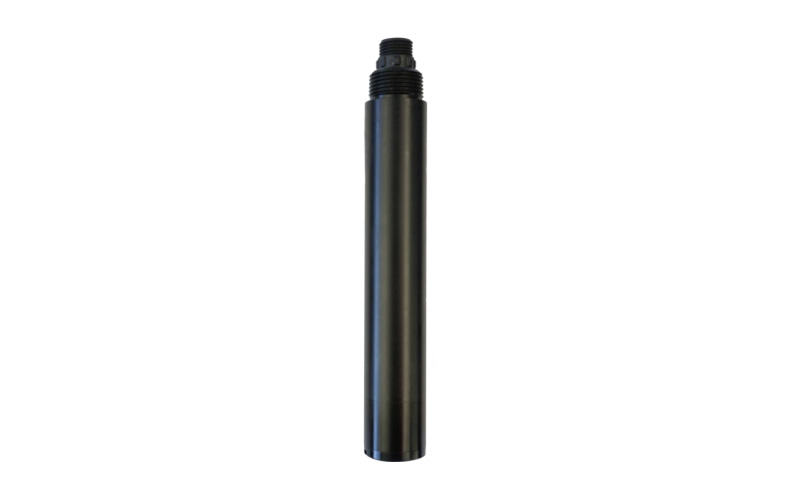
Measures water turbidity using the 90° scattered light method; simultaneously records water temperature and automatically compensates for it; two-point standard solution zero-point/slope calibration; Modbus read/write of real-time turbidity and temperature data; allows modification of the device’s communication address and switching of baud rate; supports temperature parameter correction; stable T90 rapid-response measurement.
No built-in expansion modules; cable length can be customised to suit requirements.
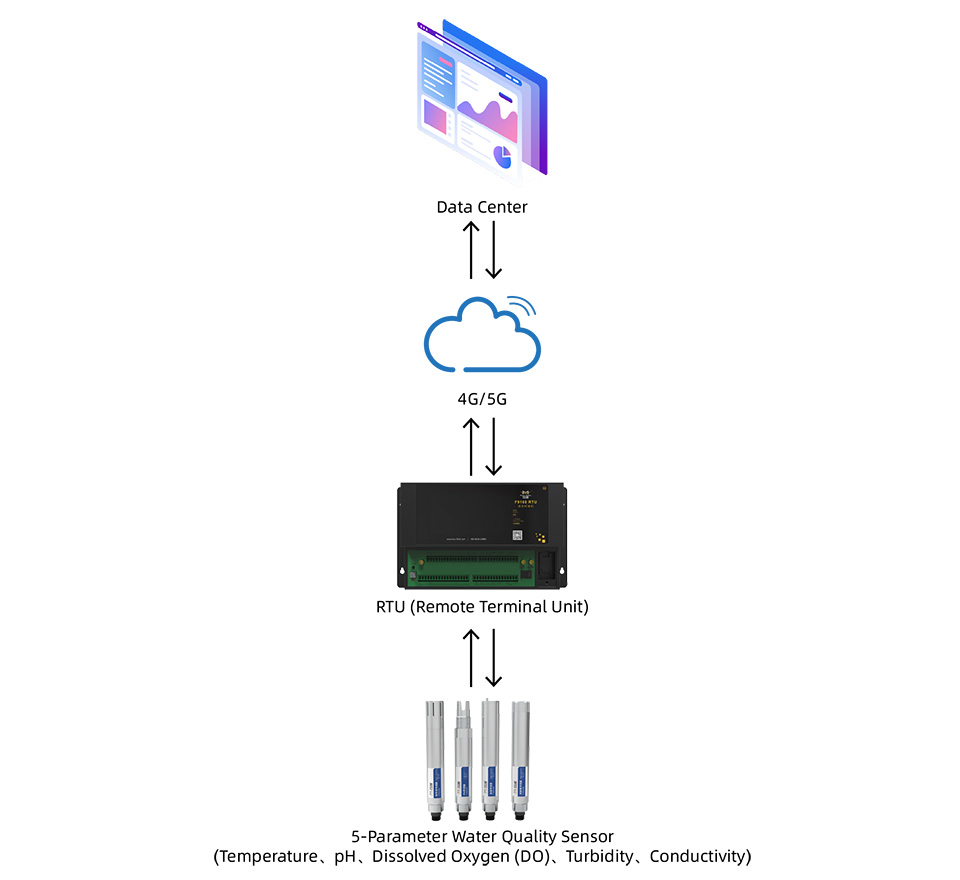
The F-IWQ1503 utilises the 90° scattered light optical detection principle and is equipped with a Pt1000 automatic temperature compensation unit. It offers a choice of three turbidity measurement ranges,featuring an IP68 fully sealed submersible probe that outputs turbidity and water temperature data via standard RS485 Modbus. It is suitable for long-term online monitoring of various water bodies; the standardised two-point calibration process reduces the complexity of on-site commissioning, whilst the easy-to-clean optical probe effectively minimises the frequency of manual maintenance required for long-term water quality monitoring.
Infrared fibre-optic optical path structure, effectively resisting interference from ambient stray light, ensuring stable measurement data in outdoor, open-air environments;Three measurement ranges fully cover scenarios from low-turbidity clear water to high-turbidity wastewater, with accuracy tailored to different water quality conditions;Pt1000 high-precision automatic temperature compensation, eliminating turbidity measurement errors caused by changes in water temperature;IP68 protection rating, suitable for long-term submersion at depths of up to 20 metres; POM/ABS corrosion-resistant housing withstands acidic and alkaline water;Standard 3/4 NPT thread for submerged installation, suitable for various locations such as monitoring wells, pipes and reservoirs;Low-power 0.2 W design, suitable for solar-powered, off-grid water quality monitoring stations;Standard Modbus RTU industrial protocol, universally compatible worldwide, enabling integration with various data acquisition terminals and cloud platforms;Simple cleaning procedure: merely wipe the optical window with a soft cloth and clean water to restore measurement accuracy, ensuring convenient operation and maintenance.
| Measurement parameters | water turbidity, water temperature | Turbidity range | 0–20 NTU / 0–200 NTU / 0–1000 NTU (three specifications available) |
|---|---|---|---|
| Turbidity accuracy | 0–20 NTU: ±3% or ±0.3 NTU; 0–200 NTU: ±3% or ±2 NTU; 0–1000 NTU: ±5% or ±3 NTU | Turbidity resolution | 0–20/200 NTU: 0.01 NTU; 0–1000 NTU: 0.1 NTU |
| Temperature range | 0–40 °C; measurement accuracy: ±0.3 °C; resolution: 0.1 °C | Connector type | 4-core shielded twisted-pair M16 waterproof aviation connector |
| Communication protocol | RS485 Modbus RTU, default 9600 8N1 | Power supply and power consumption | DC 12–24 V, total power consumption 0.2 W @ 12 V |
| Protection rating | IP68, suitable for long-term submersion to a depth of 20 metres | Operating temperature | 0–40 °C, operating pressure < 0.2 MPa |
Online turbidity monitoring in surface water (lakes, rivers), sewage networks, water treatment plants, reservoirs and marine aquaculture water bodies.
A The fluorescent membrane head may be dirty, loose or past its service life; first clean the surface of the membrane head and tighten it; if it has failed, simply replace it with a new fluorescent membrane head to restore accuracy.
A For freshwater, the default salinity is 0 and no adjustment is required; for seawater applications, enter the actual salinity value of the water body via the Modbus registers, and the device will automatically perform the salinity compensation calculation.
A 1. Prepare a 5% sodium sulphite solution in an oxygen-free environment to perform zero-point calibration; 2. Use aerated saturated distilled water or saturated air to perform slope calibration; for both steps, allow the system to stand for 3 minutes until the readings stabilise before executing the calibration command.
Send your project parameters, our engineers reply within 24 hours.
Get Free Quote